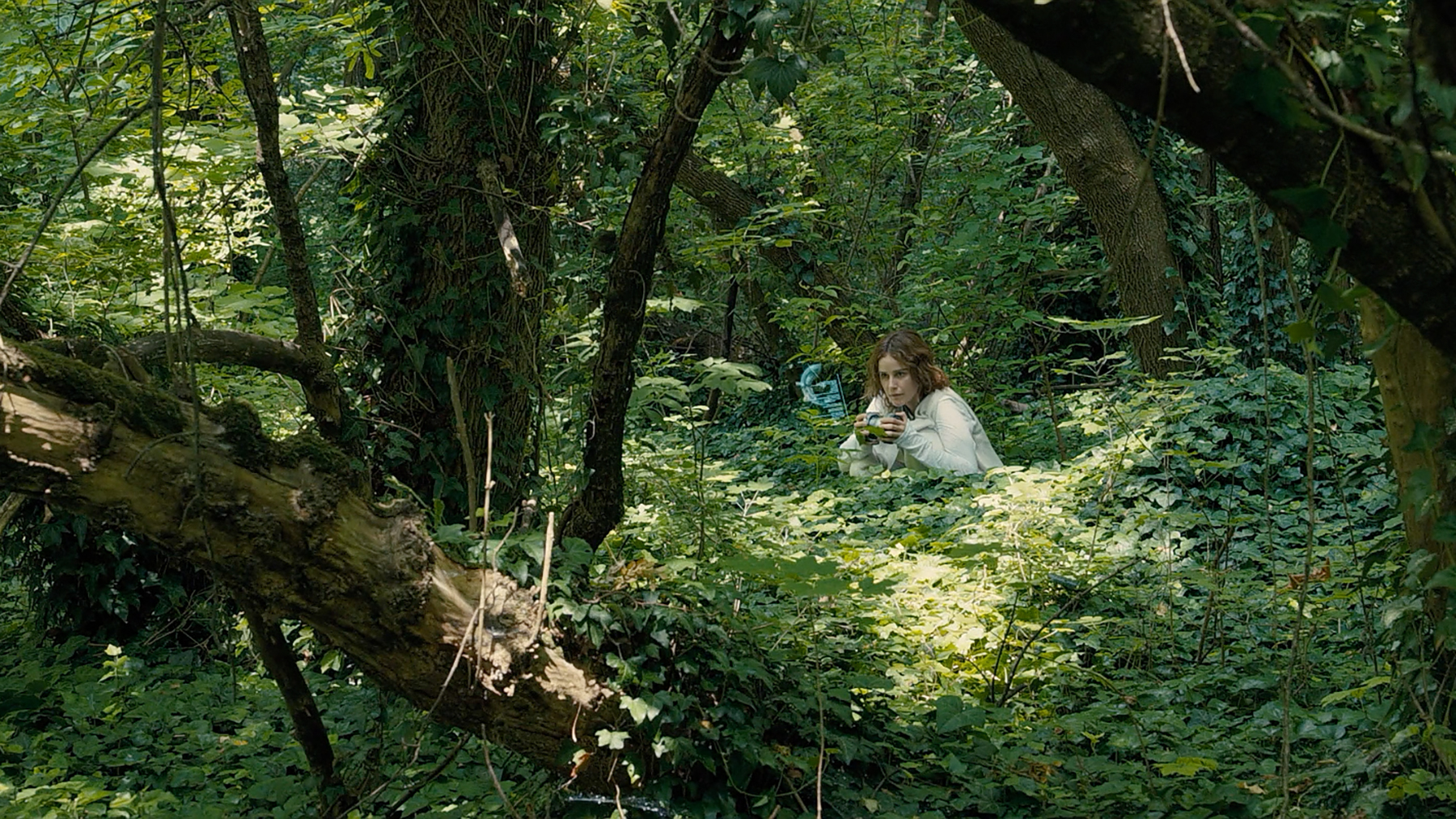
Isn’t it strange that when we have super cheap reproduction and distribution technologies we keep building hyper expensive museums to put paintings on walls? If the goal is providing people with access to important ideas, wouldn’t it make more sense to copy a painting and bring those copies to the people? Of course it would but museums are not there to bring “art to the people”, museums exist to create symbols.
Museums and temples as machines
I have been obsessed with the canonical Egyptian temple my whole life because I think it was the first museum in disguise. Not Museum as a repository of interesting objects but Museum as a symbol factory.
The canonical Egyptian temple starts with a grand entrance that makes you feel appropriately insignificant but also at the centre of the world. Then you walk through a walkway of stone lions, musicians, worshipers, and guards. Then you enter a temple with a courtyard filled with priests, then another temple, and then another, every time getting smaller and smaller. Then at the very end of all this pomp, beauty, and mysterious importance you end up in a very small chapel with a tiny figure of a god at the centre. Your lizard brain calculates that if everything you saw before led to this tiny thing, this tiny thing must be hugely important, and your lizard brain will be right. Any symbol that triggers fascination and awe on purpose, is important.
Of course the effigy itself is just stone but it is also a supremely important symbol, the stone has been transformed into a sacred idea. Whatever is at the centre of the temple becomes supremely important (sacred). The temple makes the god. The museum makes the art. Do you want to call them fetish machines? Fine. Idolatry machines? Fine too.
Museums are not public repositories of important things, museums are scarcity factories that transform objects into sacred objects and symbols into important symbols. Never forget, it is the museum that makes the art.
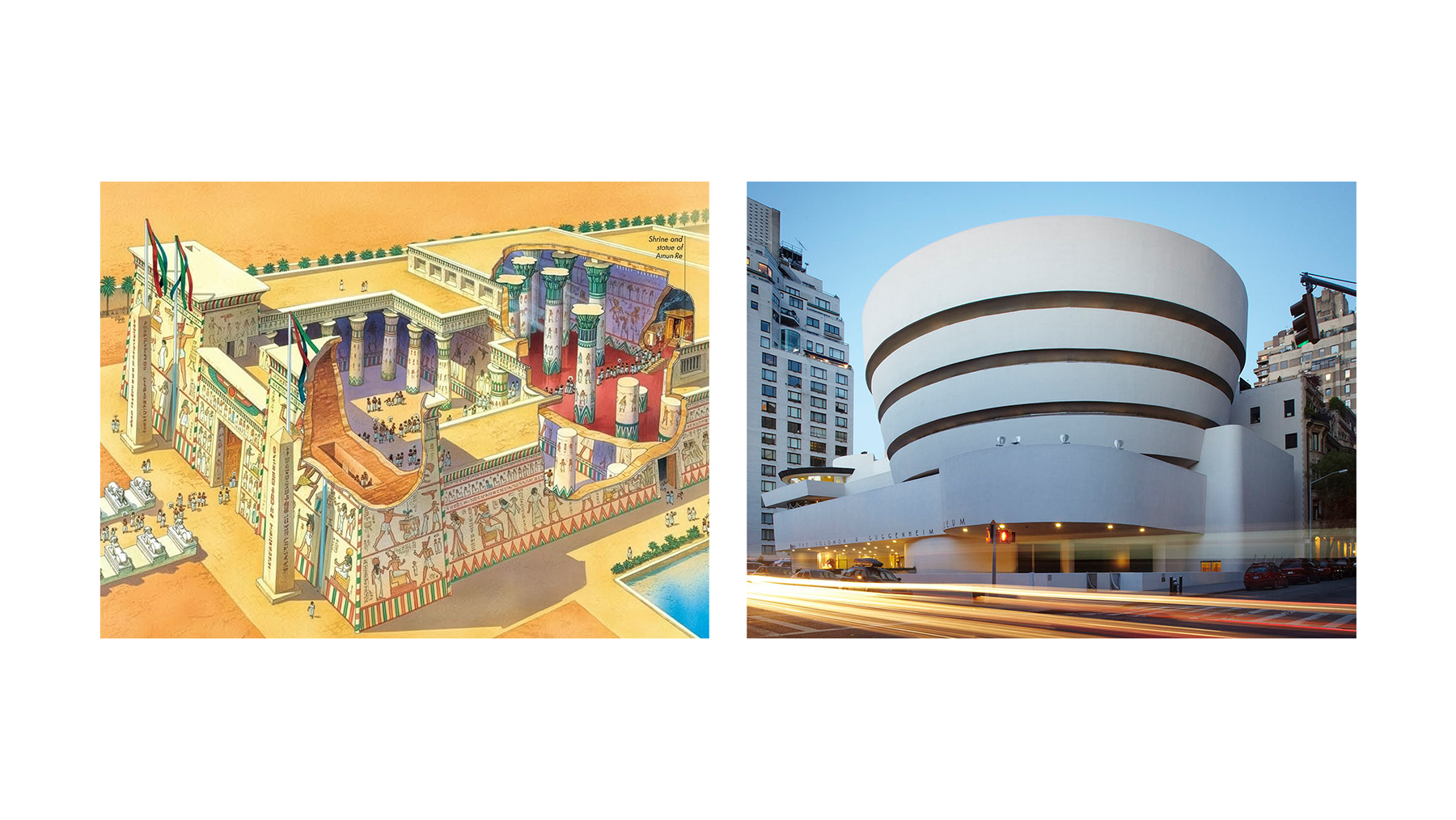
The context creates importance, importance creates uniqueness, uniqueness creates value, value creates the sacred. There is one Mona Lisa and it is supremely important because the most important people (with bureaucracies and armies behind) act as if it was irreproducible and their act makes the painting sacred. If you look at a super high resolution scan of the Mona Lisa, you might say the reproduction is just as good as the original and you will be right but, there is no value (money and power) in free reproductions and that is the whole point.
Today museums have more power than ever but, I think, only out of inertia. People are the most religious when their religion is dying because they try to convince themselves they are not lost floating in deep space. Societies create big museums to convince themselves they are still able to create sacred objects of culture while visitors chat with their LLMs and status-signal their visit on social media.
Am I restating the idea of the loss of aura in art? Let me name drop to save you two minutes of LLM prompting: I am saying everything Max Weber, Walter Benjamin, Adorno, Guy Debord, Byung-Chul Han, and Mark Fisher said about art objects but turned up to eleven.
Graphic design as fetish
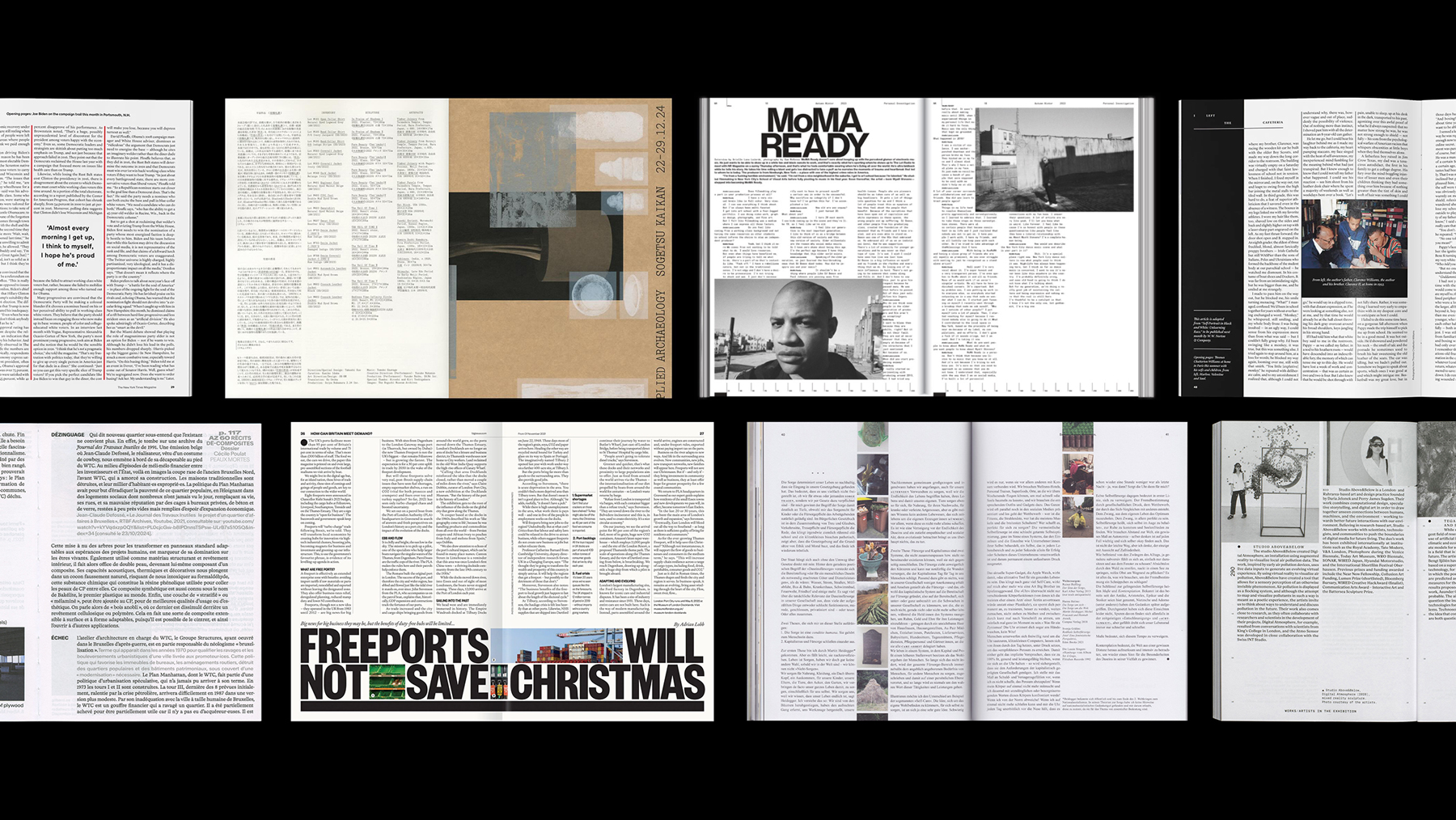
As much as I love graphic design, I am aware that it is a fetish built by a particular technological alignment during a short period of technological history. The last century has mixed mass literacy with mass reproduction and distribution and this has acted as a temple that elevated (fetishised) typography and composition.
The technologies that elevated graphic design were short lived because they had to invariably evolve into democratised recording, communication, and computing; and once you have these, the temple is destroyed. And if you don’t have the temple, you don’t have the god. When everyone can record, distribute, templatise, and prompt-copy graphic design; graphic design objects become less important.
Text and reading are becoming less relevant because LLMs summarise everything longer than two paragraphs and so the long text does not need to be carefully laid out. If there is no long text to read, there is no layout, and if there is no layout, there is no graphic design. Graphic design will be necessary but less and less culturally relevant because the fetish making conditions of graphic design do not exist anymore.
I love graphic design and I am a fetish collector of graphic design. I find layouts and typography more beautiful than any renaissance painting so, don’t take this essay as an attack on graphic design, take it as an eulogy. I know where we were, where we are, and where we are going; I am just too poor to afford design nostalgia.
From graphic design to images
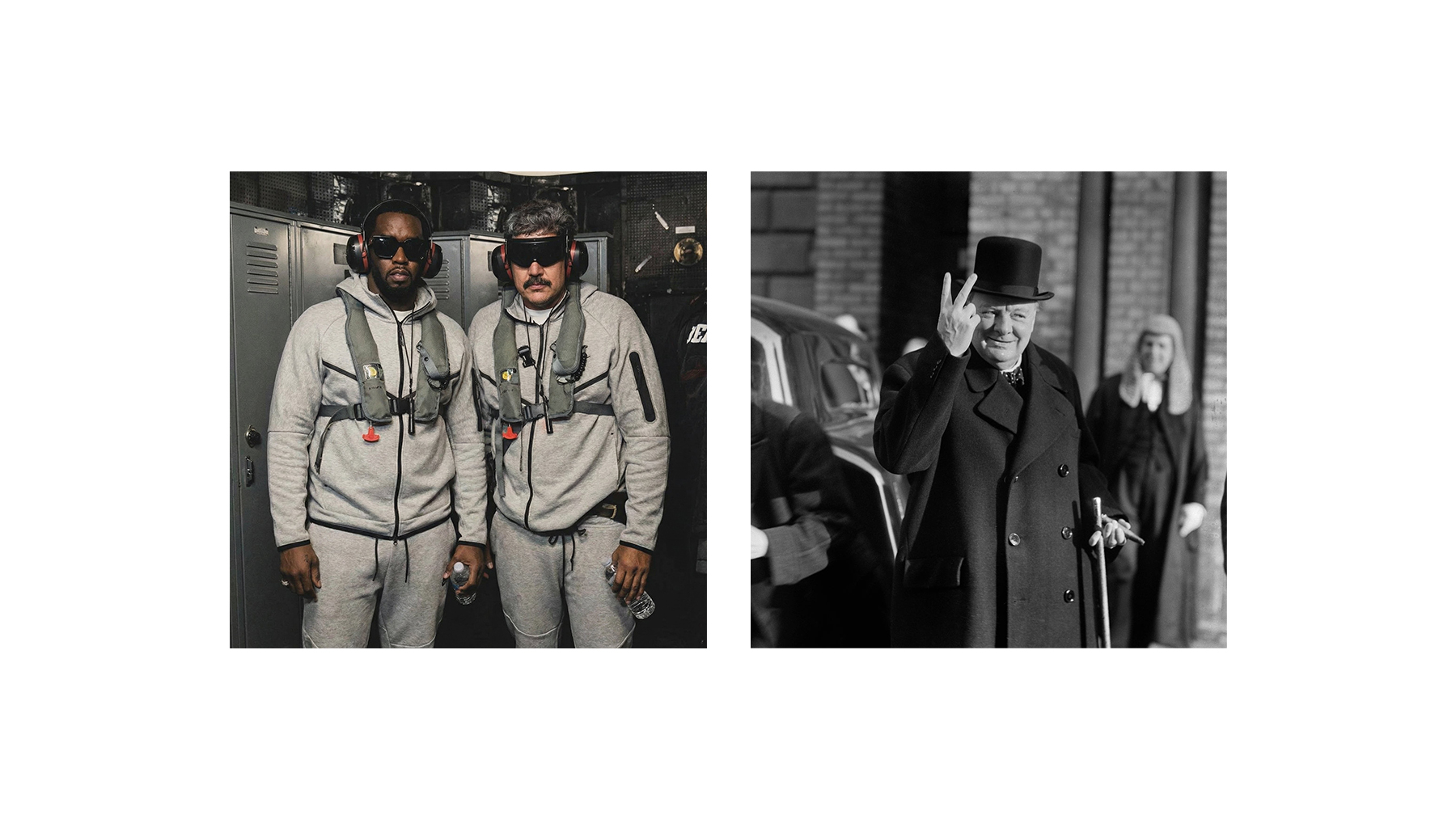
Sacred visual symbols will exist but they will be less graphic design centred and more image centred. However, even as images will become more relevant, single images will become less relevant because you can ask [your preferred AI] to modify and animate any iconic image and soon (if not now), AI agents will do this automatically to milk cents of cents of every cultural beat.
Remember those DJ Maduro memes? Now remember any previous historical image and wonder what people would have done if they had access to [your preferred AI]. Now realise that the next iconic historical image will be instantly AI memed by AI agents instead of people. Meaning will exist but the fetish of the iconic image will almost completely disappear.
What is left for us if graphic design becomes less important and the quantity and originality of visual symbols is automated? Taste? Do you mean taste or status?
When we became designers, we learnt what typeface meant serious/human/technological/playful to this or that audience, and then we learnt which typeface meant status to investors so our customers could pay us. Creative work was and is mostly mostly status work. How will symbols of status work in an automated world? Can status redefine itself faster than AI agents can commoditise it? I honestly do not know.
There is a character in Blade Runner 2049 crafting virtual worlds as a job and some say this might be the future of symbolic creation. And after that? Will we become designers of world building AI agents? Or simply unemployed? Or maybe we will always be employed because whenever someone hunts a squirrel, there will be someone offering a massage for a bite and someone else offering a cool cave drawing for another bite. But whatever happens to us, employed or not, I suspect Graphic Design will become less relevant and I am going to miss it a lot.