

I have been experimenting by automating posters and moodboards with GrokBot and ChatGPT and the results are not great, but the cost and speed are mind blowing. After hundreds of posters and moodboards I still could not hit the limit of a £100 subscription.
Cognition-glut is here, hyper abundant creation and analysis is close to free, and I am still trying to understand what the implications are. Here are nine ideas that I think matter.
Scarcity and desire
Value is scarce. It feels good when mass production initially ramps up, your instinct tell you that you are producing a lot of something valuable but, the mass production itself means meaninglessness is around the corner. The first one hundred MidJourney images feel great, the last one hundred are objectively better but they feel meaningless.
If you are a chef you eat oysters every day and you end up disgusted but the oysters didn’t change. Pornography kills desire. The surest way to enjoy food is hunger. The way to sexual desire is more clothes. The only values worth optimising are scarcity and emotion.
You feel attraction when you don’t know something, when it’s not in your face all the time.
Democratisation of mass access
The famous quote “One death is a tragedy; a million deaths is a statistic” does not describe objective reality but the interpreting subject. One death is a tragedy because my subjective experience revolves around a handful of irreplaceable people but I would only see statistics if I were a king/president/emperor. The highest and wider your view, the more desensitised you (do and must) become.
When mass cognition is democratised, the relationship of most people with symbols will become desensitised and statistical. Not only will symbols become desacralised to many, symbol fetish might die.
Symbols are sacred to all (pre-industrial experience of symbols) → Symbols are profane for most (industrial experience of symbols) → Symbols become non-relevant to all (post-AI experience of symbols)
The vertigo of quantity
I was working at Vasava and I couldn’t have been prouder, I thought I’d finally made it as a designer. One day I was at work I saw Bruno the CD reviewing and discarding portfolios (he received dozens month) and my heart sank. I remember how he discarded in a second one portfolio that a designer had crafted by hand as a mini box of cereals. I immediately thought of the effort that designer had put in designing and crafting that cereal box and I felt for him (because I saw myself in him of course) but, the truth is that the folio was not good and Bruno made the right call.
That moment stayed with me because I realised creative decision making is and must be cruel. When a CD makes choices, only the project matters and the price of that is people. Back then Creative Director was a rare position, now everyone is a CD and everyone is becoming as ruthless as a CD. The more media we consume, the more we dehumanise media.
Moving from scarcity to infinite abundance creates moral vertigo.
Faster is different
The big discovery of cybernetics is that more is different. Quantity creates qualitative difference at the mass level because mass relations create unique behaviours.
I suspect Faster is also different. When democratised AI dismantles, mutates, chews, and exploits all media, new behaviours emerge:
Copyright becomes meaningless because computation can bypass it and infinite quantity makes it hyperabundant.
The value of new tends to zero when searching, categorising, and mutating is instantaneously automated.
Mass production of difference
Mass industrial production made quantity meaningless. The repetition of a single model/type created a sense of mechanical uniformity and the rebellion against this uniformity became art.
AI mass produces difference which makes difference meaningless. If the 20th century said “I want to fight uniformity and be myself” the XXI century says “I want to be part of something“. If boomers desired uniqueness to escape society, will gen alpha might desire uniformity and join a collective? Enjoying Another Brick in the Wall or desiring to be a brick the wall?
Commoditised difference will make us desire uniformity.
New status signals and methods
Shared value is socially understood scarcity and it depends on technology: from pink marble to irony, it all depends on how hard-to-get is produced.
Pre industrial status signals:
- Materials: in a scarce pre-scientific world nobody knows where materials come from and how long would they be extractable. Gold is truly divine.
- Ownership: when production is scarce and uniqueness is the default, simple ownership is enough. Owning any object of art is irreproducible.
- Technical execution: the production of one master artisan is as magical as a comet.
Industrial status signals:
- Location in the cultural chain: Mass media works from the top down, signalling access and power at the top fo the chain. Knowing what taste makers like matters.
- Discernment: Knowing the right symbols in the chain of status matters.
- Irony and authenticity: Signalling awareness proves discernment and signals social sophistication and flaunts detachment. I know you know I know this is the right thing and that is precisely what I don’t like it or maybe I do, isn’t it funny?
- Newness: inventing next symbol in the chain of status that will then be copied, that is staying one step ahead in the treadmill of the new. I listened to them before they were cool.
Post-industrial AI status signals:
- Raw economic power: when labour brings very little economic power and the poor can copy every symbol, the only way to signal status is raw economic power. You can have a million images of Mark Zuckerberg’s yacht, you can get the blueprints and 3D print it, explore it in AR, and insert yourself and your favourite celebrity in it but still… you don’t have it.
- Anti-newness: since the speed of replication of symbols is automated and instantaneous, status will be signalled by refusing the new and selecting the right retro. It is almost impossible to create the new and even if it is created, it will be instantly reproduced and exploited so the value will exist in daring to go for the old the escamers don’t dare to.
- Biography: the replicable symbol can signal a shared understatement of provenance that benefits from reproduction. It does not matter if anything is equal to a million other things if a group of people can recognise and feel real feelings for its (real or imagined) story.
- Social embededness: prove of social participation in an genuine social structure. Someone posts a photo of their group of friends, the photo can be cloned and mutated with AI but the friendship and what it signals cannot.
Industrial Production removed the status attached to materials, ownership, and technical execution by democratising them. AI removes the status of irony, authenticity, discernment, and newness.
Post-industrial status is hyper-social, anti-new, and crude.
From object to interpretation to reaction
The art of pre-modern symbols existed in the signifier (the painting was the art because the signifier was scarce), then the interpretation became art (because popular ideas were scarce), now only popular social reaction is scarce so, art is valued in social experience and reaction because what other metric do we have?
We can argue all we want about why this or that symbol is more sophisticated but the most you can expect is for your ideas to be AI summarised because, at the end of the day, your ideas are just another Substack post. What is left is social relevance and that means comments/shares/likes.
Reaction matters more than interpretation.
Cultural solipsism
The era of the inspiration board is ending, cultural relations are becoming a free commodity when your agent can moodboard. Agentic moodboarding is free so it becomes ultra-personal, socially meaningless, and valueless.
Everyone has their own digital garden and each one is both infinitely idiosyncratic and infinitely meaningless because it has an audience of one. Digital gardening becomes solipsistic when everyone curates their own just for themselves for its own sake.
New clients don’t come with a brief but with a Pinterest board mixing personal experiences, fetishes, obsessions, and anecdotes. The job of the designer becomes diving into personal symbolic gardens isolated from shared social symbolic spaces.
Design becomes more psychoanalysis and less social.
More difference that matters less
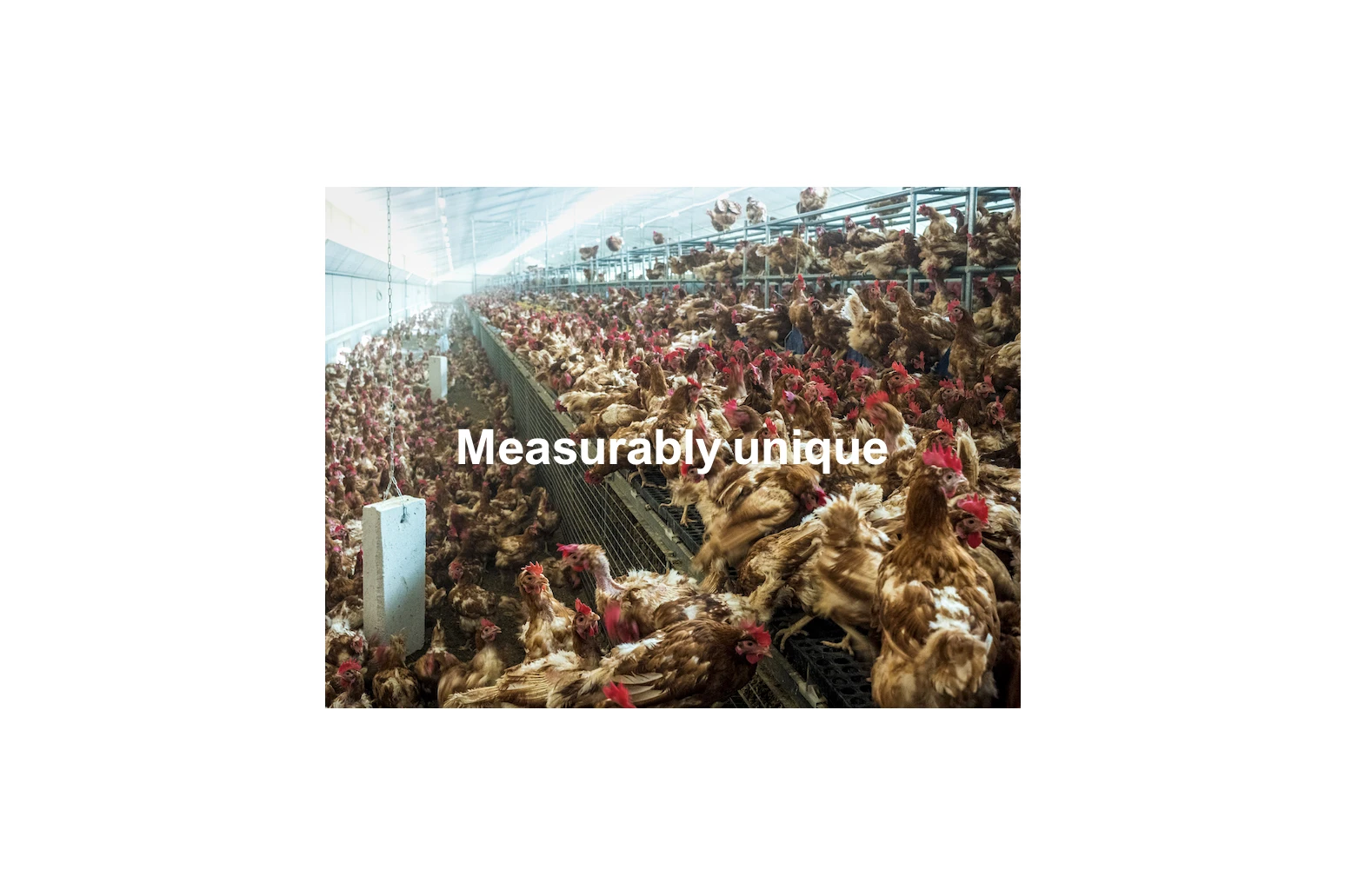
Raise two cows and name them. They will matter. Now raise ten thousand. Your ten thousand cows will have more diversity than your two but that difference will be less meaningful. Uniqueness is connected to scarcity, not to difference.
In the AI-world of infinite quantity Individuals become more different and individually identifiable while simultaneously losing their qualitative distinctiveness.
A 2026 study in the Journal of Experimental Social Psychology, comprising five preregistered studies with 1,598 participants, found that art believed to be AI-generated felt less relevant and meaningful. A 2026 meta-analysis of 19 studies found a significant homogenisation effect when people created with AI. Greater creative difference at the individual level coexists with less relevant diversity at the collective level.
There will be more difference than ever but it will matter less than ever and it will feel less different. Difference will become statistical noise and will cease to relate with genuine human uniqueness. More measurable numbers, less aura. True emotion and aura will become the only relevant qualities; not newness, not technical competence, not price, not authenticity.
The industrial planet looked like a quilt of uniform patches. The planet of industrialised cognition will look like a blanket of white noise.